
West Des Moines Address Eras
Different records answer different parts of an address history. Deeds show recorded transfers and legal interests. An assessor supplies the present parcel key and ownership lead. A city directory can place a named person or business at an address in one publication year. Newspapers, obituaries, photographs, permits, and historical society files add dated context. No source alone supplies all previous residents. A careful previous residents search therefore keeps each source and year visible.
The first task is choosing the right county. West Des Moines parcels can lie in Polk, Dallas, Warren, or Madison County. Confirm the situs, meaning the parcel's physical location, in city and county maps before opening a Recorder index. A postal city or tax mailing address is not enough.
| Historical source | Documented span | Repository | What it can establish |
|---|---|---|---|
| Polk real-estate index | Online from 1992 | Polk Recorder | Instrument parties, dates, type, number, legal text |
| Madison land records | Official records from 1838 | Madison Recorder | Recorded title and other land instruments |
| Historic city directories | Digitized 1866-1922; other formats extend later | Des Moines Public Library | Dated names, homes, occupations, businesses, and phone entries |
| Suburban directory runs | 1963-2002; WDM/Polk City 1998-2002 | Polk Central Services listings | Bounded modern address and household leads |
| Local newspaper indexes | Several named runs from 1907-2020 | Des Moines Public Library | Obituary, event, street-name, and image leads |
Trace West Des Moines Deeds
Start from the county assessor's present record. Copy the parcel ID, current title holder, situs, mailing address, legal description, plat, lot, block, and any book or page reference separately. The legal description is the land's formal recorded identity. It often survives when a street number, postal city, or subdivision name changes.
Then use Iowa Land Records or the county index. The statewide basic form includes county, recorded-date range, grantor or grantee direction, person or company name, document type, image-only filtering, and sort controls. Image coverage varies. An index result without an online image still points to a record that may be viewed or requested from the Recorder.
- Find the current parcel and confirm its county. Do not choose an office from the ZIP or mailing city alone.
- Search the current owner as grantee. Open the acquisition deed and save its instrument date, recording date, legal description, and prior grantor.
- Search that prior grantor as a grantee in an earlier date range. Compare the legal description before accepting the match.
- Repeat the process backward. Note corrections, releases, easements, plats, liens, annexations, and transfers rather than counting only warranty deeds.
- At the online cutoff, ask the Recorder for older images, microfilm, deed books, lot indexes, or counter help.
- Grantor
- The person or entity that transfers an interest in a recorded instrument.
- Grantee
- The recipient of that recorded interest.
- Chain of title
- The linked sequence of recorded interests affecting one parcel.
- Legal description
- Lot, block, plat, or land-survey text that identifies the property beyond its street address.
Route West Des Moines Past Owners
Polk County provides the clearest stated online cutoff, with real-estate indexing from 1992 forward. Its Recorder is at 111 Court Avenue, Suite 250, Des Moines, and the real-estate phone is 515-286-3160. Dallas County routes recorded real estate through its Recorder and AVA, with older COTT and transfer resources also noted. Warren County's exact public online date span was not found, so its Recorder office is the safe fallback for previous residents research.
Madison County reports land records dating to 1838. The Madison County Recorder page is also one of the captured source views for this address-history research.
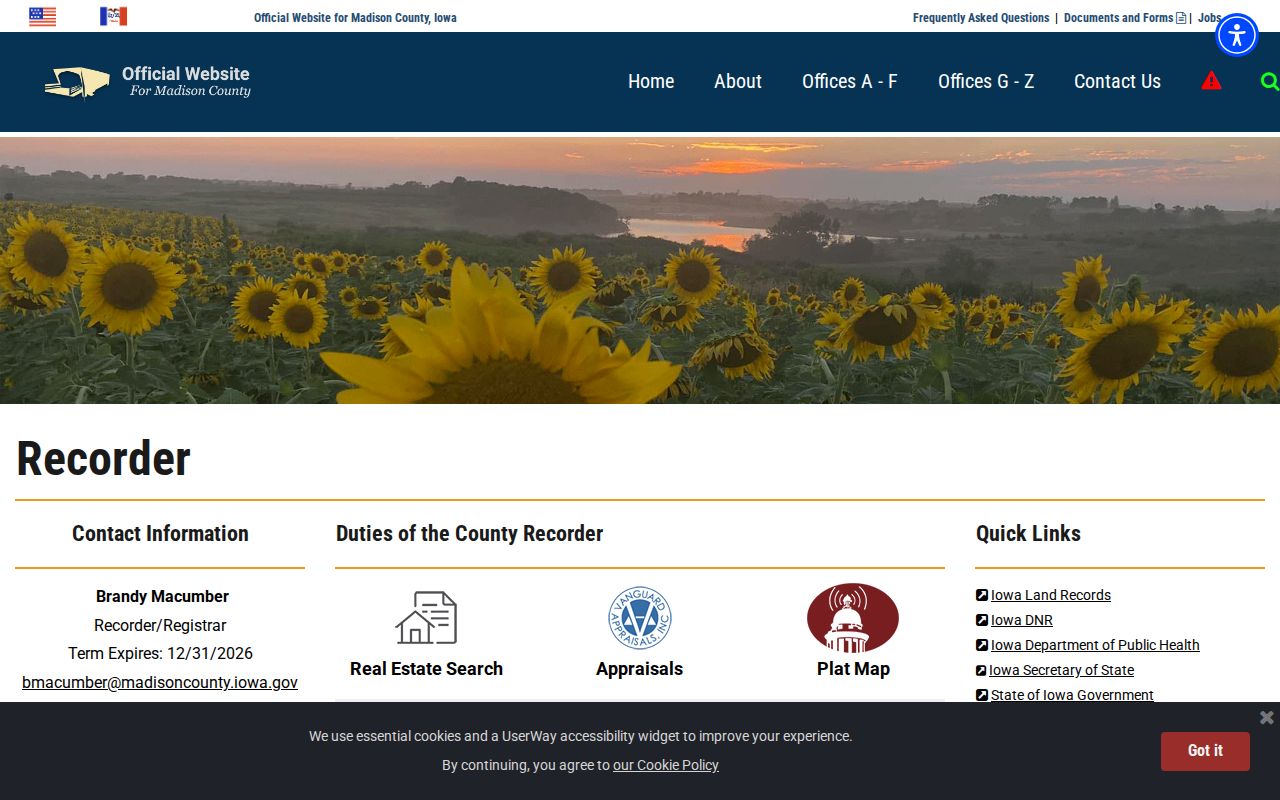
The office page marks the local route when a West Des Moines parcel falls in Madison County and online coverage does not answer the question.
Read West Des Moines Land Indexes
Search the land index in both directions. A purchase usually places the new owner under grantee, while a later transfer may place that same party under grantor. Search legal entities as companies and people as last and first names. Start broad by county and date, then narrow by type and legal description. Keep party roles exact, since a notary, lienholder, agent, or deed witness is not a former occupant.
The Iowa Land Records search screen shows the statewide entry point used across the four counties.
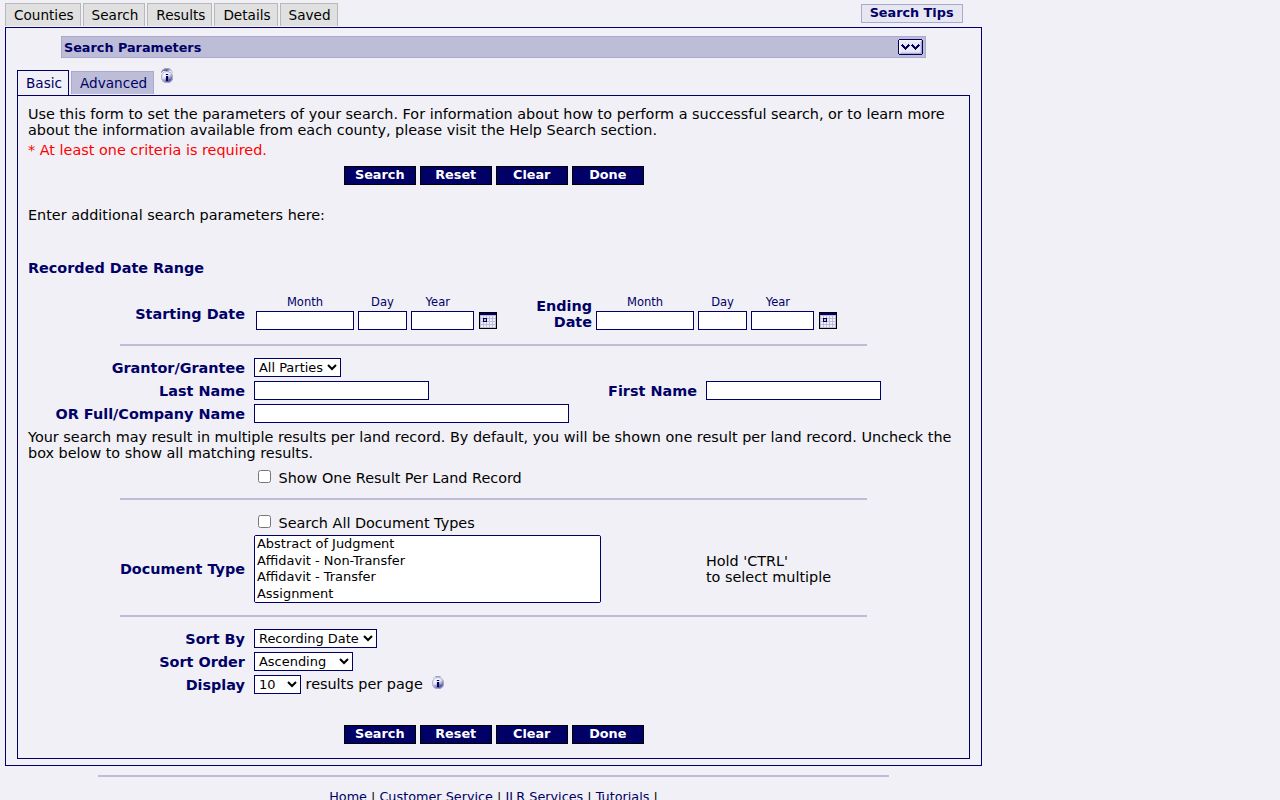
The county and party-direction controls are the key to walking a chain backward rather than running one broad name search.
West Des Moines Dallas Records
Dallas County's recorded real-estate route matters along the city's western growth areas. The Recorder describes copies, certification, transfer fees, and lien scope, while real-estate UCC work remains a separate state route. Do not infer that a Dallas mailing address places a parcel in Dallas County. WDMaps and the assessor must establish situs first.
The official Dallas recorded real-estate page was captured for the previous residents trail.
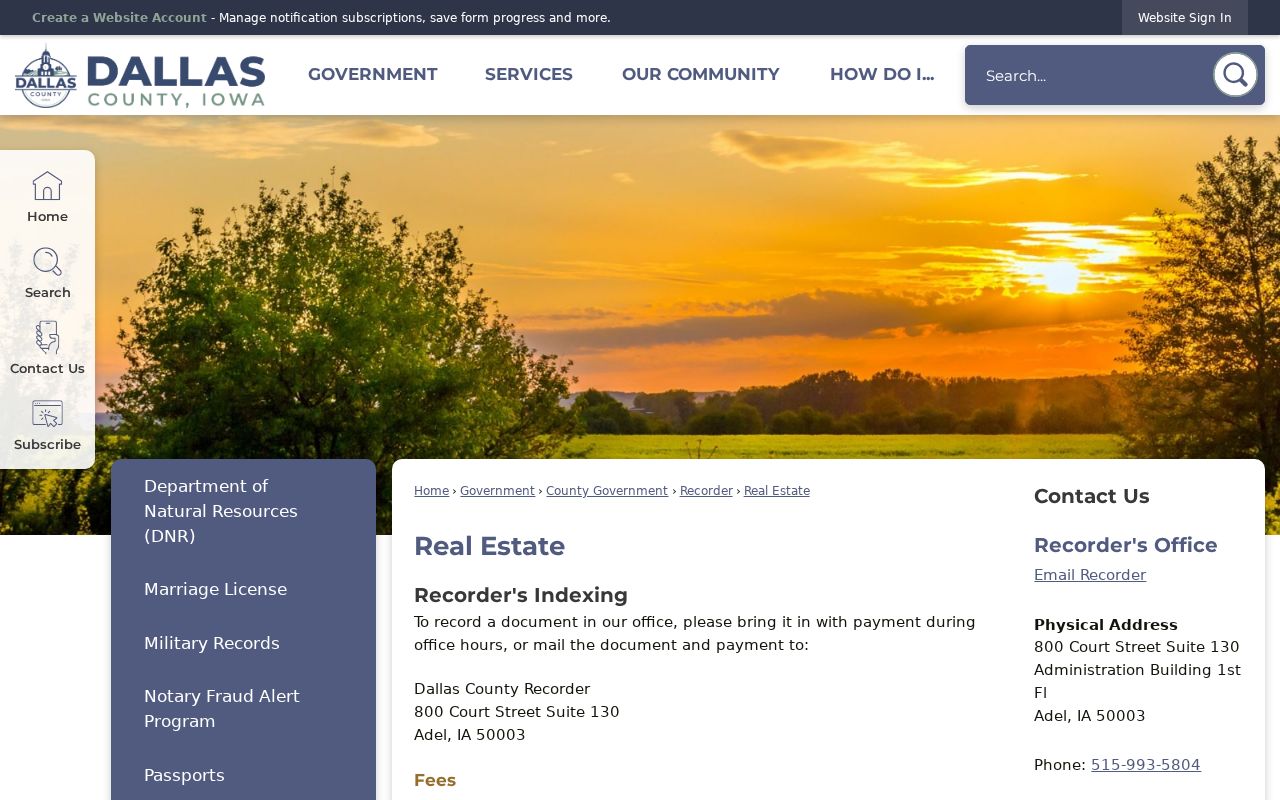
Use that office route when AVA does not load, an older transfer is missing online, or a certified copy is needed.
Match West Des Moines Households
Ownership is only half of the previous residents question. A directory entry may show a name, occupation, employer, business address, residence address, telephone, and household notation. Older volumes may abbreviate Valley Junction as Val Junc. Read both the alphabetical listing and the street guide. Do not merge a business address with a residence line.
Move year by year around a known deed, obituary, photograph, or newspaper event. The full collection details belong on the West Des Moines city directory page, while this process keeps focus on one address.
- Choose the directory year nearest the recorded transfer or known event.
- Search the street and house number, then note every named role and the printed municipal label.
- Check the same address in adjacent years for a move, vacancy, renumbering issue, or change from business to home use.
- Pair a dated directory hit with the nearest public census schedule or another record that supports household ties.
- Mark a blank as “not found in this volume.” It is not proof that nobody lived there.
Decode West Des Moines Address Changes
Historic searches must preserve Valley Junction and West Des Moines as separate source labels. Municipal naming shifted over time, but no complete citywide old-to-new street renumbering crosswalk was located. The official 2026 street-name list can normalize today's spelling. For older addresses, compare a directory or newspaper entry with the plat, legal description, county parcel, current situs, and a city permit or map record.
Fifth Street offers a strong local test. The building history for 318 Fifth Street combines assessor information, dated commercial occupants, newspaper references, and photographs from 1953, 1957, 1965, 1999, 2005, and 2014. It also notes demolition tied to the 1993 flood. Such evidence can explain why an address changed use or appearance without turning a named business occupant into a claim about private residence.
Old-address rule. Match the legal parcel and map context before treating the same street number as the same place across decades.
Extend West Des Moines Resident Trails
The Des Moines Public Library newspaper and magazine index provides several useful endpoints for previous residents: a Des Moines Register index from 1986 through 2020, an obituary index from 1960 through 2020, Tribune holdings and indexes, a street-naming index, and a pictures index. An index entry is a lead. Obtain the article or image before treating it as proof.
Search a surname with Valley Junction, West Des Moines, Fifth Street, a business name, flood, railroad, or neighborhood. Obituaries may connect relatives and dates, while probate records can help explain a transfer after death. The State Historical Society holds county records and newspaper microfilm, and its archive appointments require advance planning. The West Des Moines Historical Society adds newspapers, yearbooks, photographs, oral histories, and Jordan House or Bennett School materials, though its online catalog is not a full resident index.
Limit West Des Moines Resident Claims
Previous residents should be described only as the source supports them. A title holder is an owner lead. A grantee is a party to an instrument. An assessor mailing recipient may live elsewhere. A directory line is a dated printed listing. A building history may name a commercial occupant. None of these labels should be silently changed to “lived here.”
Save the source, date, county, address form, party role, and confidence note. Resolve conflicts with the strongest record available: a certified record, official current portal, official image or index, official historical source, archive lead, then transcription. Never let OCR or a modern postal label overwrite a clearer deed or page image.
Lawful use. Research past residents for house history, genealogy, heirs, or personal curiosity. Do not use address trails to stalk, harass, track, or harm a living person.